 Main Menu


Post
Intermediate wheatgrass as a dual use crop for grain and grazing


This is the very first issue of the Land Report from December 1976, the year of The Land Institute’s founding.
Table of Contents for the Land Report (Number 1, December 1976)
Page 1
The Fall Semester
Recounts the start of the first semester with seven students, the accidental destruction of their workspace by fire, and the immediate community support that enabled classes to resume.
The Work of The Land Institute
Defines the mission as a dual search for alternative technologies (agriculture, energy, shelter) and alternative, holistic worldviews that encourage semi-self-sufficiency.
E. F. Schumacher to Visit The Land
Announces an upcoming visit by Dr. E. F. Schumacher, the economist and author of Small is Beautiful, whose work inspired much of the Institute’s philosophy.
Page 2
Readings and Discussions
Explains how the physical labor of the program is balanced with intellectual discussions on Western civilization, philosophy, and the roots of the ecological crisis.
Student Life
Student John Lawson describes the group’s communal living dynamics, shared decision-making processes, and the jobs students hold outside the Institute to earn living expenses.
Page 3
Leaving The Land to Learn
Students document their field trips to visit local organic farmers and alternative home builders to gather practical knowledge on sustainable living.
Guest Speakers
A summary of the diverse guest speakers hosted during the semester, including retired professors, biologists, and psychologists who shared their life experiences with the students.
Page 4
Hardening Off
Using a gardening analogy, this essay suggests the Institute’s goal is to “harden off” students, preparing them to survive outside the “greenhouse” environment of affluent, developed culture.
Newspaper House
Student Eric Herminghausen details his experiment to construct an inexpensive, dome-shaped dwelling using baled newspapers as the primary insulation and building material.
Page 5
Wind Generator
Kyle Mansfield describes the process of acquiring, restoring, and mounting a thirty-two volt wind generator to provide electricity for the student houses.
Page 6
Solar Hot Water Heaters
John Lawson explains the construction of a flat plate solar collector and notes that renewable energy must be accompanied by lifestyle changes.
Solar Food Driers
Russell Brehm outlines his experiments with preserving vegetables using both screen-based and box-type solar food driers to conserve energy.
Page 7
Indian House
This report details the construction of a round, earth-covered structure inspired by traditional Pawnee and Navajo designs, utilizing local Osage Orange poles.
Page 8
Milo as a Food for Humans
Dave Henderson explores the culinary potential of grain sorghum (milo) as a wheat substitute, sharing experiences making pancakes and baked goods.
The Land Library
Following the loss of books in the fire, the Institute calls for donations to rebuild a library focused on environmental studies and appropriate technology.
Page 9
Board of Directors
A listing of the individuals guiding the non-profit corporation, consisting primarily of Salina residents, along with two out-of-state advisors.
Rebuilding
This update describes the volunteer effort to construct a new log building using donated power poles and railroad ties to replace the structure that was lost in the fire.
Roger Welsch
The report announces a visit by folklorist Roger Welsch, who specializes in the culture and lore of the Great Plains.
Page 10
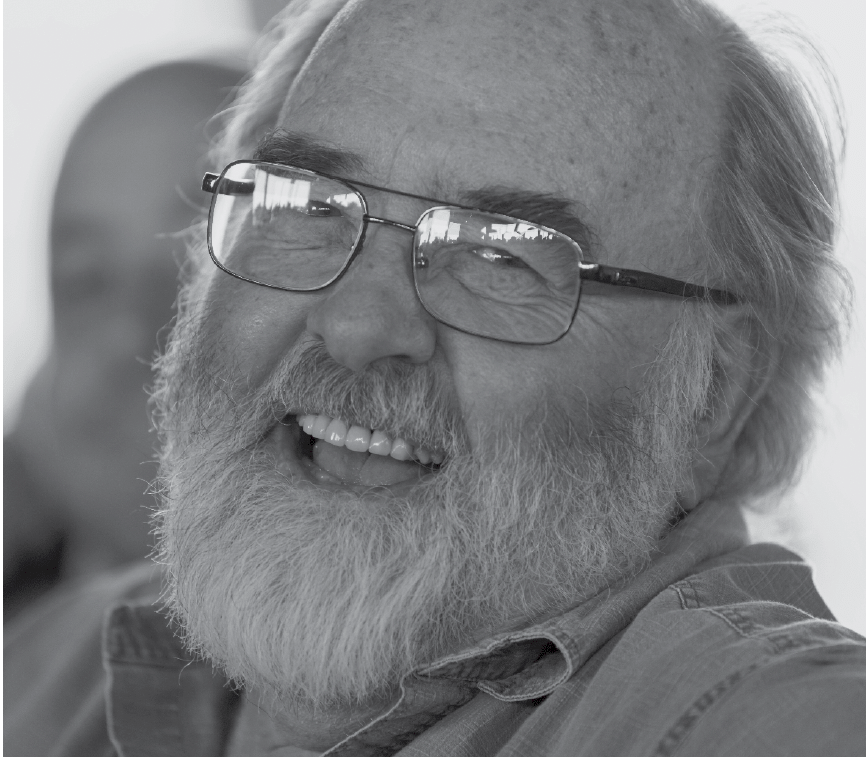
Director of The Land Institute
A biographical background is provided for director Wes Jackson, detailing his academic history and resignation from California State University to focus on The Land Institute.
Spring Semester
Information is provided regarding the schedule and application process for prospective students interested in the upcoming Spring term.