 Main Menu


Post
Intermediate wheatgrass as a dual use crop for grain and grazing


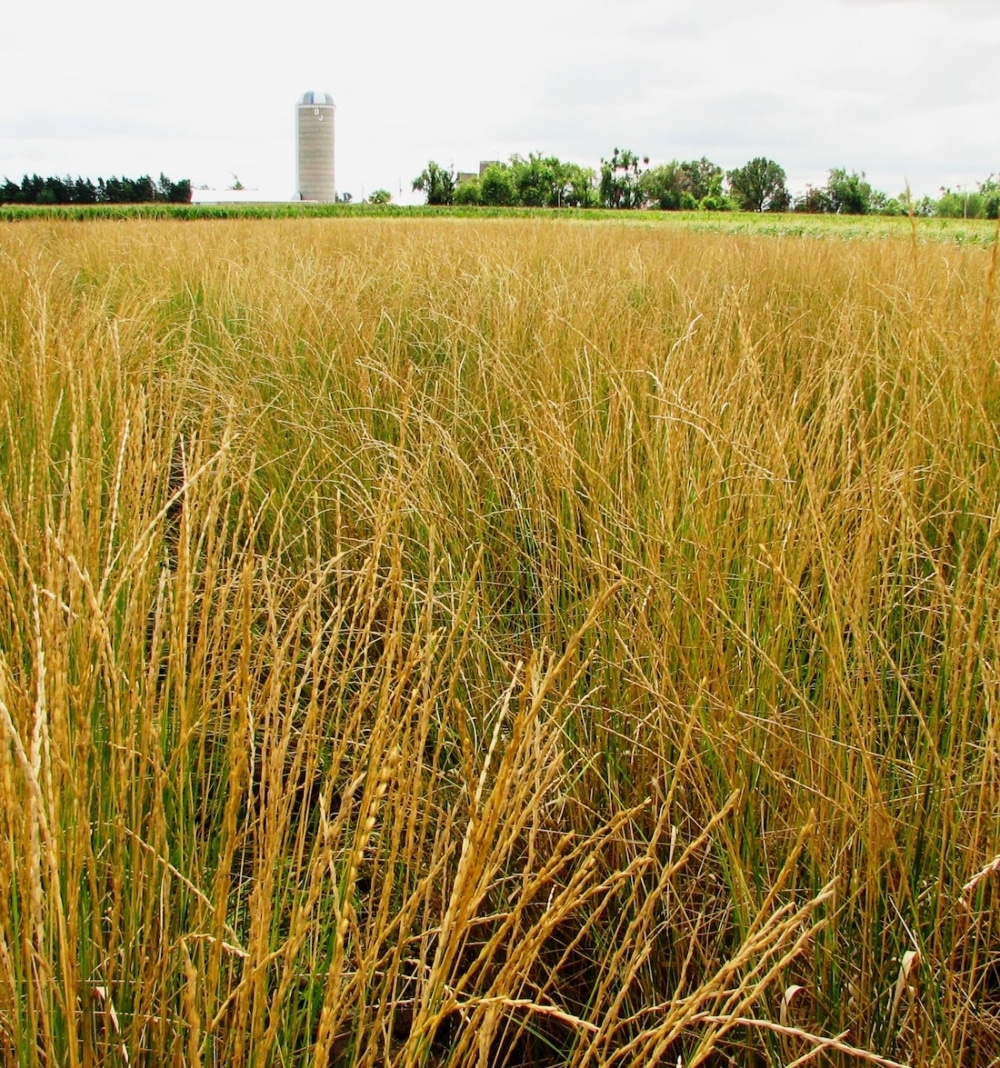
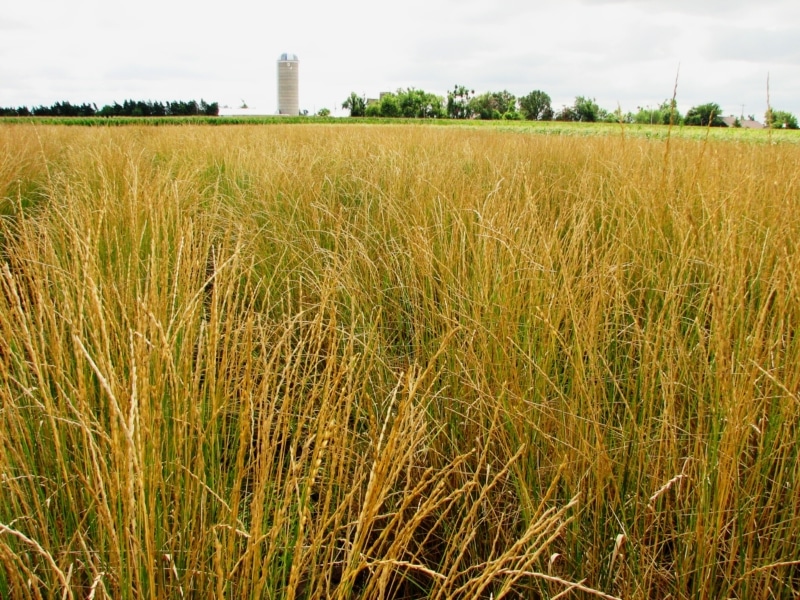
Research partners in the Upper Midwest documented the impact of grazing time (by season) on Kernza productivity with regard to forage and grain yields. This research can help Kernza farmers better understand how the perennial grain can serve as a dual-purpose crop, thereby increasing the sustainability and available revenue streams for their operations.
Kernza intermediate wheatgrass (IWG) [Thinopyrum intermedium (Host) Barkworth & D.R. Dewey] is a perennial grain and forage crop with novel dual-use potential. Grazing IWG forage and/or intercropping IWG with legumes can increase total annual forage yields, but the effect of grazing timing on grain yield needs to be understood to maximize producer returns and the productivity of the perennial stand. In this study, we compared Kernza grain and forage yields under different cattle grazing timing treatments (spring, fall, or spring and fall) with ungrazed IWG stands, in both IWG monocultures and IWG–legume intercrops. We established the experiment in the fall of 2016 at Morris, MN, and Lancaster, WI, and collected data over 3 years. In the first grain production year, grazing spring vegetative regrowth reduced Kernza grain yield compared with ungrazed stands in both Minnesota (213 vs. 360 kg ha−1, respectively) and Wisconsin (821 vs. 1030 kg ha−1, respectively). However, grazing fall regrowth after summer grain and straw harvest did not negatively affect grain yield in the following year compared to the ungrazed control. Intercropping IWG with legumes increased accumulated forage vegetative regrowth in Wisconsin, but not in Minnesota. Overall, our study confirms IWG’s potential as a dual-purpose crop under grazing management and recommends fall grazing to minimize adverse effects on subsequent grain yields. Future research should focus on refining grazing strategies to maximize dual-use productivity.