 Main Menu


Post
Intermediate wheatgrass as a dual use crop for grain and grazing


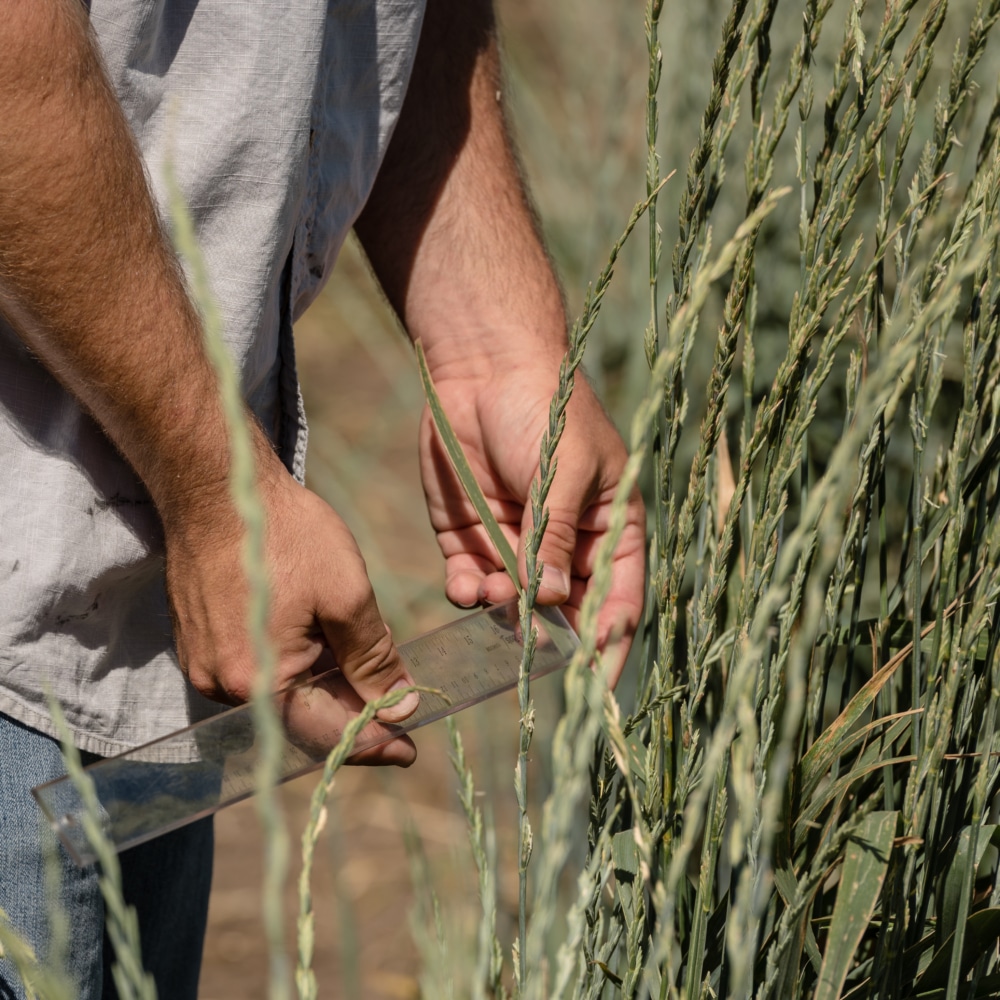
Kernza research from University of Minnesota collaborators examines how leaf and cellular ageing can drive grain yield decline. These findings could inform future Kernza research, specifically breeding efforts to address this factor and mitigate yield decline.
Intermediate wheatgrass (IWG, Thinopyrum intermedium) is an emerging perennial grain currently being domesticated, but its adoption is constrained by a yield decline particularly between the first and the second years, the basis of which is still poorly understood. Here, we hypothesized that this decline is primarily driven by shifts in senescence dynamics triggered by plant ageing, leading to a limitation on photoassimilate remobilization towards seed filling in the second production year.
To test this hypothesis, we continuously measured senescence dynamics proxied by tracking photosynthetic rate along with leaf blade and sheath nitrogen content over two consecutive growing seasons, yielding up to 1080 observations. Additionally, we phenotyped stomatal anatomical traits associated with plant ageing and we quantified grain yield and its component traits including seed mass, size and number and harvest index.
An interannual yield decline of 23.4 % was due to a reduction in seed mass but not in number of seeds or spikes, indicating a limitation of photoassimilate availability. Consistent with this, higher year 1 yields were associated a delay of the onset of senescence by 421.4 °Cd, with photosynthetic and leaf nitrogen decline rates that were 42 % and 7 times steeper compared with year 2. Leaf blade stomatal densities, size and nitrogen were lower in year 2, consistent with lowering of leaf construction costs through ageing.
These results show that interannual yield decline in intermediate wheatgrass is an ageing process that is correlated with a shift towards an earlier and slower rate of canopy senescence that is possibly limiting the rate of nitrogen remobilization for seed filling. While further confirmation is needed, our results indicate that (1) leaf nitrogen and stomatal anatomy could be potentially used as indirect selection traits and (2) genetic manipulation of leaf senescence is potentially a viable strategy for mitigating IWG interannual yield decline.