 Main Menu


Post
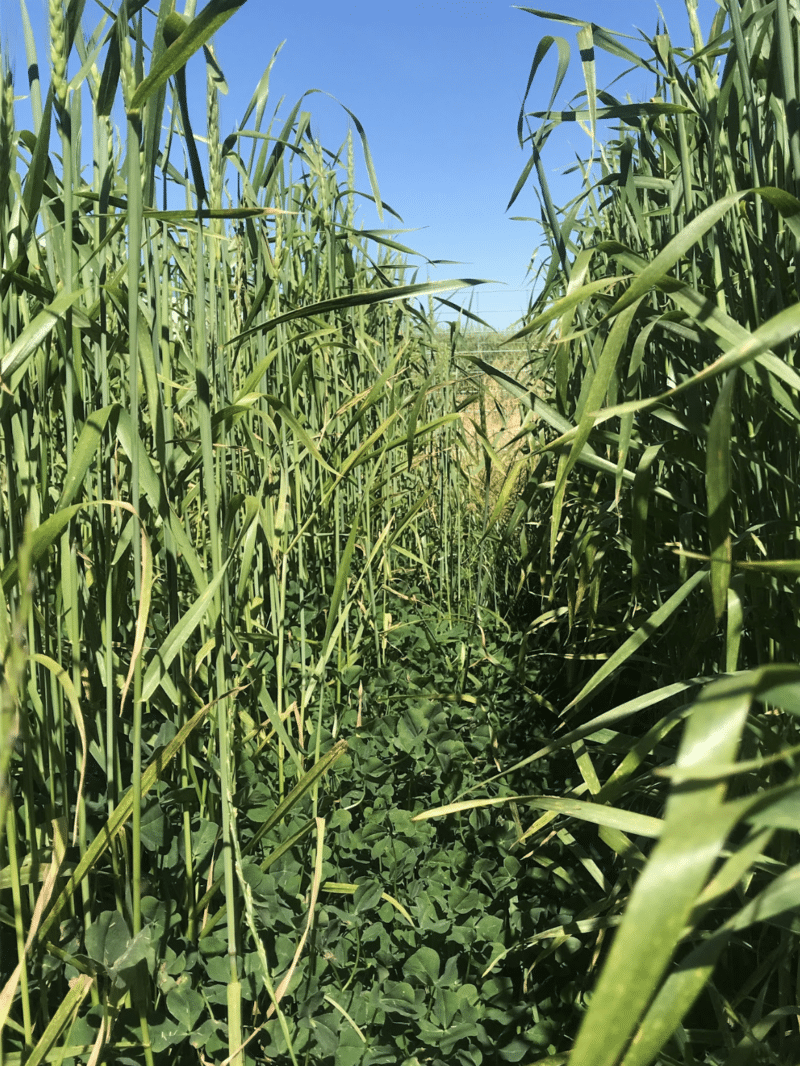
Intermediate wheatgrass as a dual use crop for grain and grazing



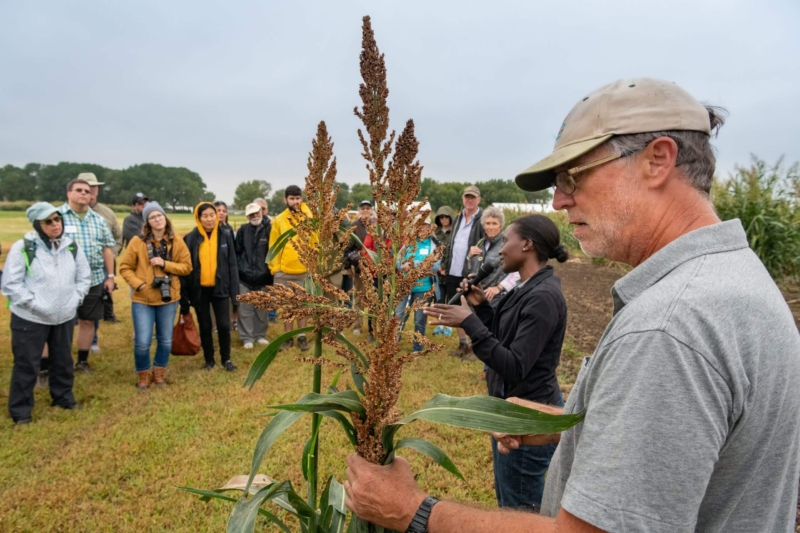
New perennial sorghum research from The Land Institute, University of Illinois, and University of Georgia underscores how genomic prediction could enable perennial sorghum development strategies to accelerate breeding and reduce the time and cost associated with multi-year field evaluation.
Perennializing crops such as sorghum (Sorghum bicolor) offer the potential to provide food security in regions with degrading soils and limited rainfall. Genomic prediction is a very useful tool for expediting the adaptation of perennial sorghum to such regions of the world. We assessed the performance of two genomic prediction models in two perennial sorghum populations derived from S. bicolor and Sorghum halepense crosses. The first model is a standard genomic best linear unbiased prediction (GBLUP) model, while the second model (called MultiBLUP) is a multi-kernel extension of GBLUP that partitions genome-wide single-nucleotide polymorphisms based on proximity to a priori genomic features. We used real and simulated data to better understand how models performed under the influence of different genetic architectures. The results from the real traits showed that incorporating genome-wide association study-derived information into the MultiBLUP model did not consistently improve genomic prediction accuracy over the standard GBLUP model. The results from the simulated traits provided further insights into the conditions under which GBLUP provides higher predictive abilities over the MultiBLUP approach. Mainly, as quantitative trait nucleotide size increases, so does GBLUP’s predictive ability over MultiBLUP. Our findings suggest that leveraging prior knowledge of trait-associated genomic regions does not yield more accurate predictions of traits critical for perennial sorghum breeding.