 Main Menu


Post
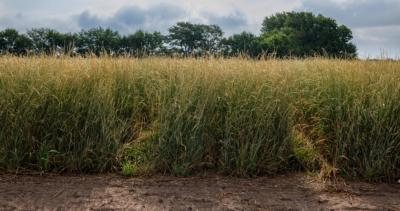
Intermediate wheatgrass as a dual use crop for grain and grazing


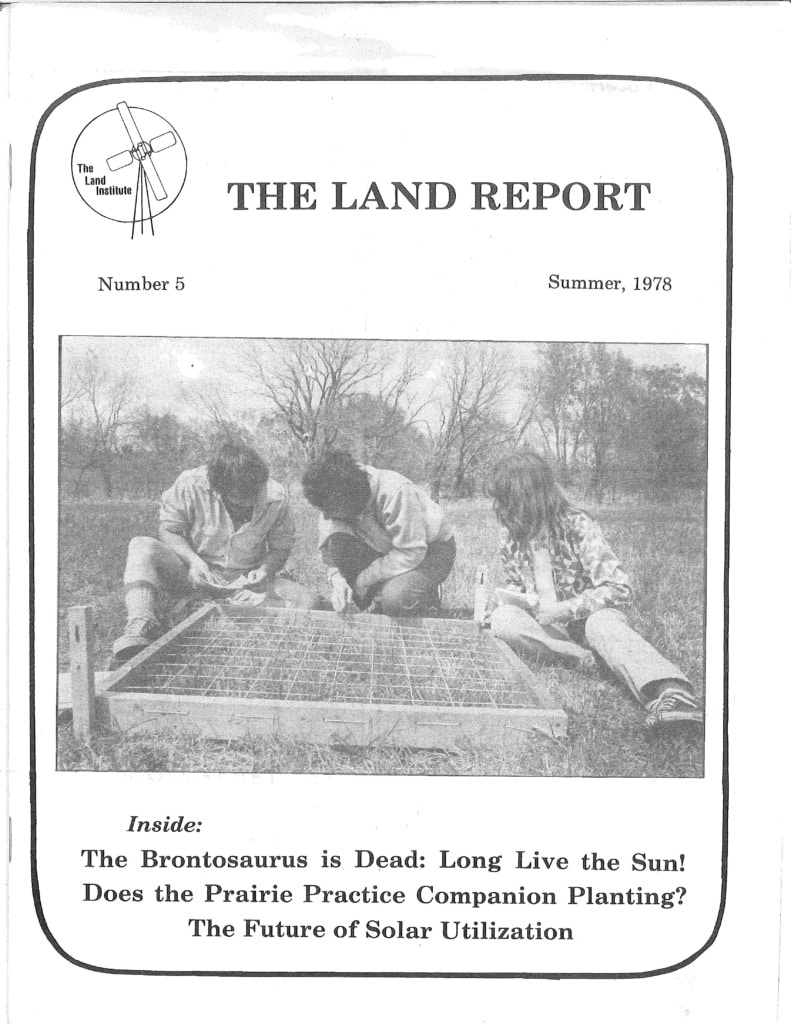
Table of Contents: Land Report (Number 5, Summer 1978)
Page 2
Editor’s Note
The editor explains that the summer issue was delayed due to the demands of harvesting and preserving the institute’s organic garden produce.
Page 3
Amory Lovins to Visit in October
Renowned energy consultant Amory Lovins, author of Soft Energy Paths, is scheduled to visit Salina in October for a conference on renewable energy.
Symposium on Soft Agricultural Paths
A group of farmers, educators, and energy advocates gathered for a “Prairie Think Tank” to discuss sustainable agricultural practices that rely on renewable energy and reduce erosion.
Page 4
On Being a Student at The Land
Maureen Hosey reflects on the unique educational experience at The Land Institute, emphasizing hands-on learning, community living, and the absence of traditional grades.
A Search for an Ecological Utopia
Students engaged in a series of discussions that explored utopian concepts through various lenses, including religious, political, and philosophical, to clarify values for an ecologically sound future.
Page 6
Visitors are Teachers
During the spring semester, numerous guest speakers visited The Land, sharing expertise on topics ranging from wildlife conservation and wind energy to labor issues and third-world agriculture.
Page 7
The Land Library
Following a fire that destroyed the original collection, The Land Institute has rebuilt its library through generous donations of books and funds from supporters.
Bread Retreat is New Experience
A special day was dedicated to baking and tasting various whole grain breads, fostering a deeper appreciation for this basic food and its connection to the earth.
Page 8
Arbor Day Service Honors E. F. Schumacher
Friends and students gathered for an Arbor Day ceremony to honor the late E. F. Schumacher, planting Chinese chestnut trees in memory of his contributions to the field of appropriate technology.
Page 9
Mushroom Workshop is Popular
Dr. Harold Keller led a workshop on mushroom identification and collection, which attracted participants from across the region despite the early spring conditions.
Home Gardening the Organic Way
A workshop for gardeners covered planning, soil preparation, and pest control, featuring presentations by students and local organic growers.
Page 10
SUN DAY Rained Out!
Although rain forced a postponement, The Land Institute eventually hosted hundreds of students for SUN DAY, demonstrating solar and wind energy systems.
Page 11
Prairieland Food Cooperative
The local food co-op has transitioned to a committee-based management structure and continues to distribute natural foods while seeking a permanent location.
Kansas Organic Producers
This organization of organic farmers facilitates information exchange through meetings and newsletters, gaining attention for their successful sustainable farming methods.
Workshops and Conferences of Interest
A list of upcoming events includes conferences on eco-agriculture, biological agriculture, prairie conservation, and solar diversification.
Page 12
The Future of Solar Utilization
Mel Stampe reports on a tour of solar facilities in the Southwest, identifying three potential paths for solar development: grassroots DIY, engineered active systems, and centralized high-tech power generation.
Page 14
The Brontosaurus is Dead: Long Live the Sun!
Karen Black reviews Amory Lovins’ book Soft Energy Paths, endorsing his argument for a transition from centralized, non-renewable energy to diverse, renewable resources.
Page 16
K. G. & E. Official Deceives Nuclear Regulatory Commission
Bill Ward details the legal battle against the Wolf Creek nuclear plant, highlighting the utility’s failure to consider a viable alternative for coal conversion.
Page 17
Sunflower Alliance Holds Rally
Demonstrators gathered near Burlington, Kansas, to protest the construction of the Wolf Creek nuclear plant, expressing concerns about its economic and environmental impact.
Page 19
Water-Pumping Windmill is Raised
Student Tom Moore describes the restoration of a 1914 Aermotor windmill, reviving a traditional technology to pump water at The Land.
Page 20
Continued Work on Tamped Earth Walls
Jeff Brown reports on the progress of the Indian House project, detailing improvements made to the tamped earth construction technique using a lime-soil mixture.
Page 21
For the Children
Dana Jackson reflects on global development issues, offering recommendations for U.S. policy to support the basic human needs of developing countries.
Page 22
Adobe House Becomes Grow Hole
An unfinished adobe structure was converted into a pit greenhouse (“grow hole”), utilizing solar heat stored in water-filled drums to extend the growing season.
Page 23
Experimental Plots Started
The Land Institute has planted thirty-five varieties of perennial grasses and forbs to research their potential as alternative seed crops.
Page 24
Indian Uses for Prairie Plants
Maureen Hosey describes the traditional Native American uses of several prairie plants, including their food and medicinal applications.
The Feasibility of Perennial Crops
Wes Jackson discusses the potential for developing herbaceous perennial crops to replace annuals, reducing soil erosion through plant breeding techniques.
Page 25
Does the Prairie Practice Companion Planting?
Jim Peterson investigates whether natural plant associations in the prairie can inform domestic companion planting practices, conducting field studies on specific species.
Page 28
Friends of The Land
The Institute invites supporters to contribute financially to its educational and research programs, noting that this is the last free issue of the newsletter.
Special Programs
Upcoming events include discussions on technology assessment, a conference on soft energy paths with Amory Lovins, and a workshop on wood stove heating.