 Main Menu


Post
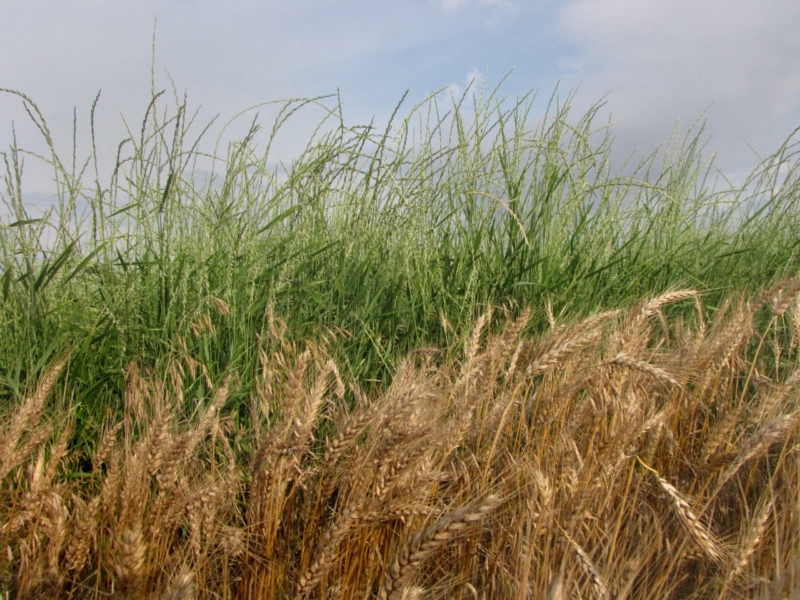
Intermediate wheatgrass as a dual use crop for grain and grazing

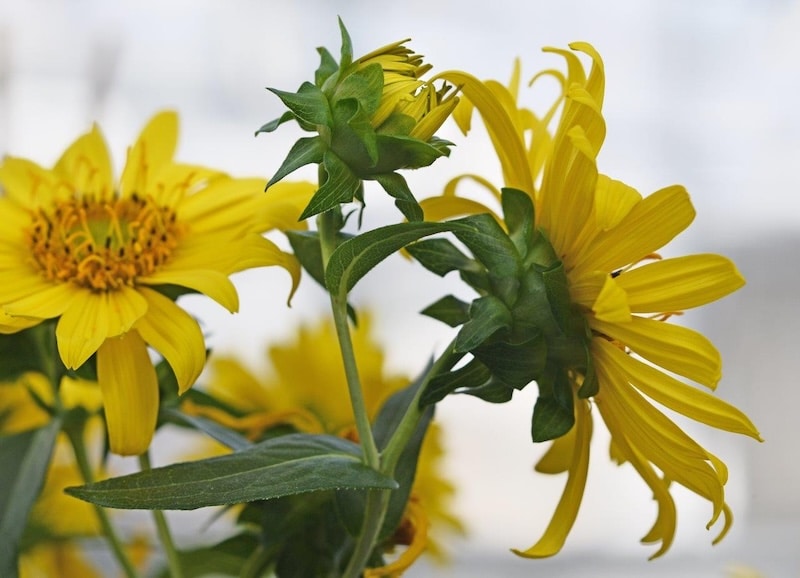
Perennial grain research collaborators in Canada and at The Land Institute published research exploring the potential of domesticating wild perennial sunflowers for perennial oilseed crop candidates.
Parallels exist between the domestication of new species and the improvement of various crops through selective breeding for traits that favor sowing, harvest, and the retention of yield potential, as well as directed efforts to improve their agronomics, disease resistance, and quality characteristics. Common selection pressures may result in the parallel selection of orthologs underlying these traits, and plant breeders can exploit homologies between crop species to improve germplasm. Perennial grains and oilseeds are a class of proposed crops aimed at enhancing the diversity and sustainability of agricultural systems. Maximilian sunflower (Helianthus maximiliani Schrad.) is a perennial crop, a wild relative of sunflower (Helianthus annuus L.), and a candidate perennial oilseed species. Understanding parallels between cultivated H. annuus and H. maximiliani may provide new tools for the development of Maximilian sunflower and other wild relatives of sunflower as crops to enhance functional diversity in cropping systems. F2 populations of Maximilian sunflower segregating for traits associated with the domestication ideotype of cultivated sunflower, including branching architecture, capitulum morphology, and flowering time, were developed to investigate parallels between H. maximiliani and H. annuus. Genotype-by-sequencing (GBS) was employed to genotype novel Maximilian sunflower populations and perform quantitative trait locus (QTL) analysis. A total of 11 QTL in five regions were identified across 21 linkage groups using 4142 GBS-derived single-nucleotide polymorphism markers called using the sunflower reference genome as a guide. A major QTL on linkage group 17b, associated with aspects of floral development and apical dominance, was discovered and corresponds with a known domestication QTL hotspot in H. annuus, and candidate genes were identified. This suggests the potential to exploit orthologs for the neo-domestication of H. maximiliani for traits such as branching architecture, timing of anthesis, and capitulum size and morphology, thereby developing a perennial oilseed crop from the wild relatives of cultivated sunflower.