 Main Menu


Post
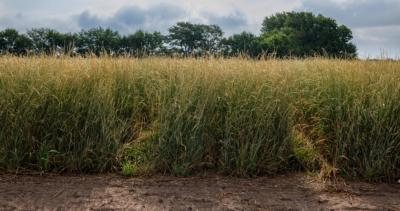
Intermediate wheatgrass as a dual use crop for grain and grazing



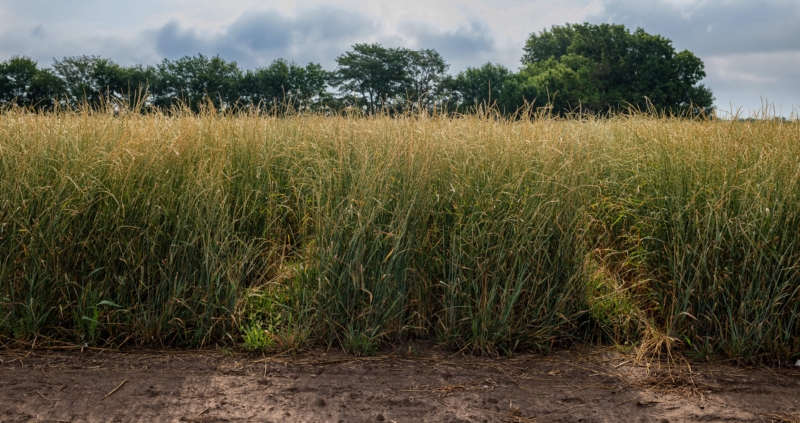
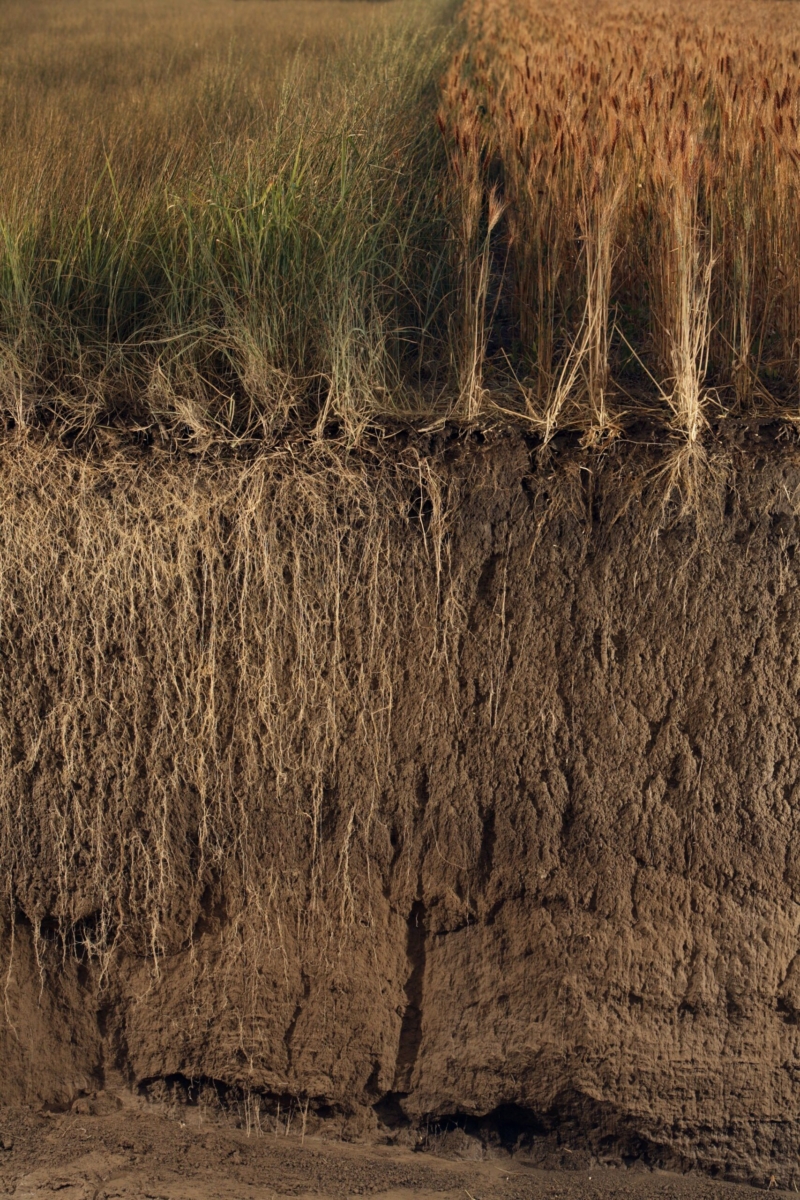
Researchers from the University of Wisconsin specializing in dairy and plant sciences published a paper indicating that Kernza® perennial grain straw (dry stalks) can be used as a viable alternative feed source for dairy heifers to help them meet their Average Daily Gain (ADG) goal for growth and development, while also providing the ecological benefits of a perennial crop on fields.
Kernza straw (KS) is a high-fiber, low-energy byproduct of intermediate wheatgrass (Thinopyrum intermedium [Host] Barkworth & D.R. Dewey) that may serve as an alternative forage to increase dietary fill and reduce the risk of over-conditioning in late-pregnant heifers. We hypothesized that inclusion of KS in the diet of late-pregnant heifers would reduce feed intake and BW gain, nutrient digestibility, and urinary N excretion, but increase enteric methane production depending on the level of inclusion. Thus, a complete randomized design study lasting 12 wk was conducted with 24 heifers (507 ± 2.87 kg BW) fed a TMR that included either 0% (0KS), 20% (20KS), or 40% (40KS) KS, with a 40:60 mixture of corn silage and alfalfa haylage (DM basis), and urea to equalize dietary CP. Heifers were evaluated for DMI, ADG, BCS, stature-related body measurements, feed-sorting behavior, nutrient digestibility, methane and carbon dioxide emissions, and N balance. In this study, KS averaged 71.1% NDF, 4.8% CP, and 50.6% TDN (DM basis), TMR NDF was 41.0%, 47.1%, and 53.3%, and TMR CP was 13.3%, 12.8%, and 12.2% for the 0KS, 20KS, and 40KS diets, respectively. The DMI was 12.7 ± 0.13 kg/d for the 0KS diet but decreased to 11.7 ± 0.10 and 11.7 ± 0.14 kg/d when heifers were fed the 20KS and 40KS diets, respectively. In contrast, NDF intake was 5.0 ± 0.05 kg/d for the 0KS diet but increased to 5.4 ± 0.05 and 6.2 ± 0.08 kg/d when heifers were fed the 20KS and 40KS diets, respectively. The ADG was 1.35 ± 0.05 kg/d for the 0KS diet but decreased to 1.10 ± 0.05 and 0.86 ± 0.06 kg/d when heifers were fed the 20KS and 40KS diets, respectively. Change in BCS was lower when heifers were fed the 40KS diet compared with the other 2 diets, but dietary treatments did not alter stature-related body measurements. Heifers fed the KS diets sorted consistently against long particles but increasingly in favor of fine particles over time. Methane production and yield averaged 270 ± 5.70 g/d and 23.6 ± 0.50 g/kg DMI, but methane intensity increased when heifers were fed the 40KS diet compared with the 0KS diet (165 ± 7.89 vs. 207 ± 15.9 g/kg ADG.) The NDF digestibility declined when heifers were fed the 40KS compared with the 0KS diet (65.8% ± 0.36% vs. 61.8% ± 0.32%). Nitrogen intake was 356 ± 9.34 g/d for the 0KS diet but decreased to 312 ± 7.25 and 301 ± 11.1 g/d when heifers were fed 20KS and 40KS diets, respectively. Fecal N excretion was reduced when heifers were fed the 20KS compared with the 0KS diet (104 ± 4.86 vs. 79.7 ± 2.98 g/d), but urinary N excretion was reduced when heifers were fed the 40KS compared with the 0KS diet (212 ± 10.5 vs. 182 ± 6.71 g/d). This study demonstrated that KS can be used as a feed ingredient to modulate performance (DMI, ADG, BCS) and manure N excretion of dairy heifers.