 Main Menu


Post
Intermediate wheatgrass as a dual use crop for grain and grazing

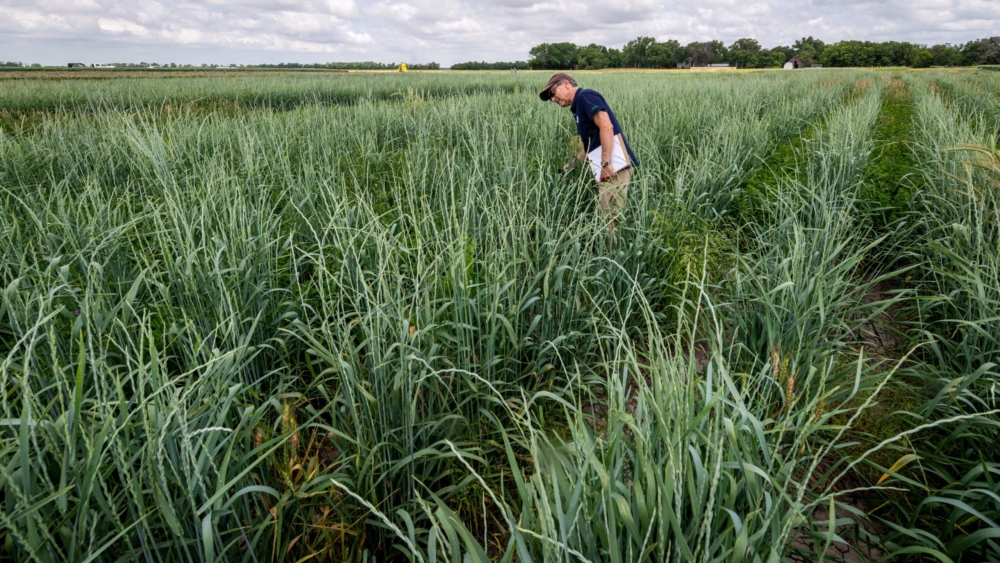
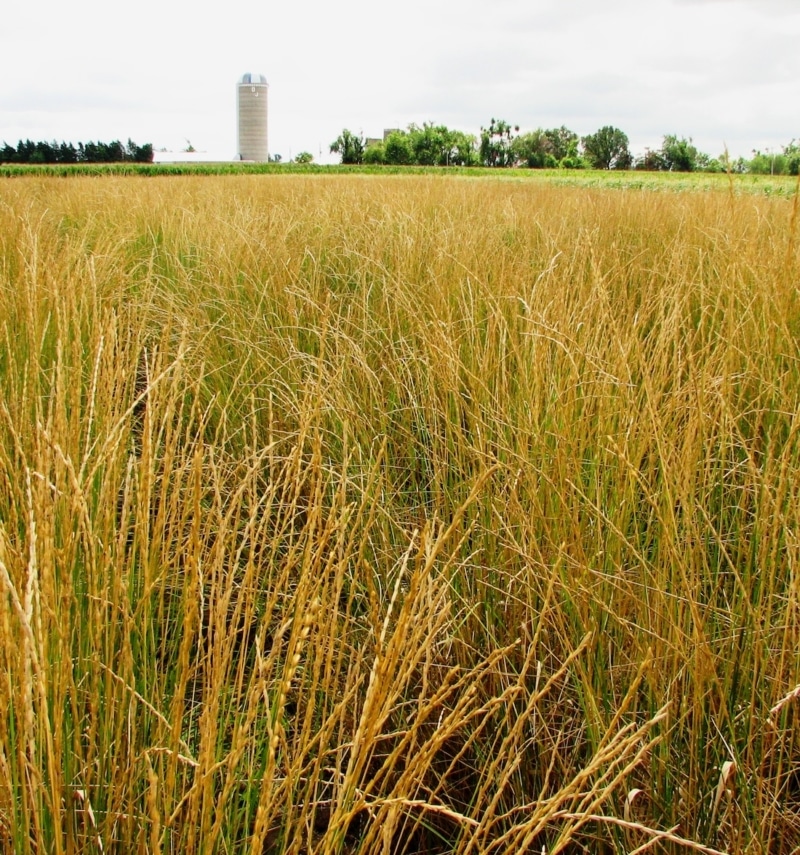
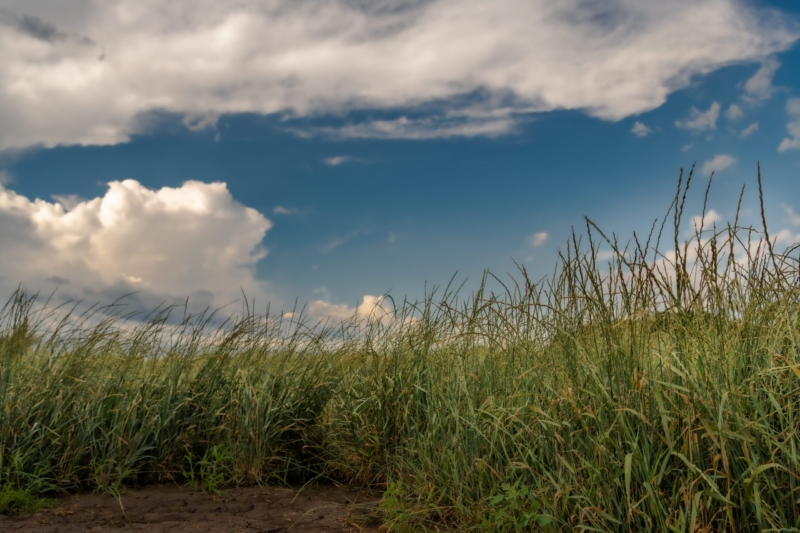
Tim Crews, Chief Scientist at The Land Institute, and several researchers at Colorado State University examined how the composition of soil microbial communities differed under Kernza®, perennial wheat, annual wheat, and annual and perennial cropping systems where these grains were grown in companion with the perennial legume alfalfa.
Perennial agriculture is an alternative agricultural paradigm with potential to improve soil health and reduce energy input. Cereal-legume intercropping (or biculture) is often suggested together with perennial crops as a way to reduce exogenous nitrogen (N) input. In developing new perennial cereal varieties, a crop’s ability to adapt to neighboring legumes and optimize interactions between crops is of particular interest. The rhizosphere microbial community plays a major part in this plant adaptation since much of the N transfer between cereals and legumes is facilitated by microbial activity. Therefore, we conducted a field study to examine plant performance and rhizosphere communities of the recently domesticated perennial cereal Kernza (Thinopyrum intermedium (Host) Barkworth & D.R.Dewey), annual wheat (Triticum turgidum L. subsp. durum (Desf.) Husn.), and their hybrid, perennial wheat. Each genotype was planted either in monoculture or in biculture with alfalfa (Medicago sativa L.), and its rhizosphere microbial community was profiled using 16S and ITS amplicon sequencing. The 16S rRNA gene amplicon profiles of perennial wheat were distinct from those of annual wheat and were similar to those of Kernza (pairwise PERMANOVA, p = 0.012, p = 0.316, respectively); the hybrid seemingly inherited microbial recruitment traits of its perennial parent more so than from the annual parent. Interestingly, the inclusion of alfalfa led to the convergence of 16S profiles, likely due to its competitive pressure across genotypes. In contrast, the fungal community did not show a clear genotype effect (PERMANOVA, p = 0.551). In conclusion, we found that crop genotype influenced rhizosphere microbial communities, with rhizosphere microbiome inheritability skewed toward the annual parent, and that this was further shaped by legume competition. Our study demonstrates the importance of including rhizosphere plant genotype-microbial interactions in the evaluation of novel cereal crops in both monoculture and cereal-legume biculture.