 Main Menu


Post
Intermediate wheatgrass as a dual use crop for grain and grazing


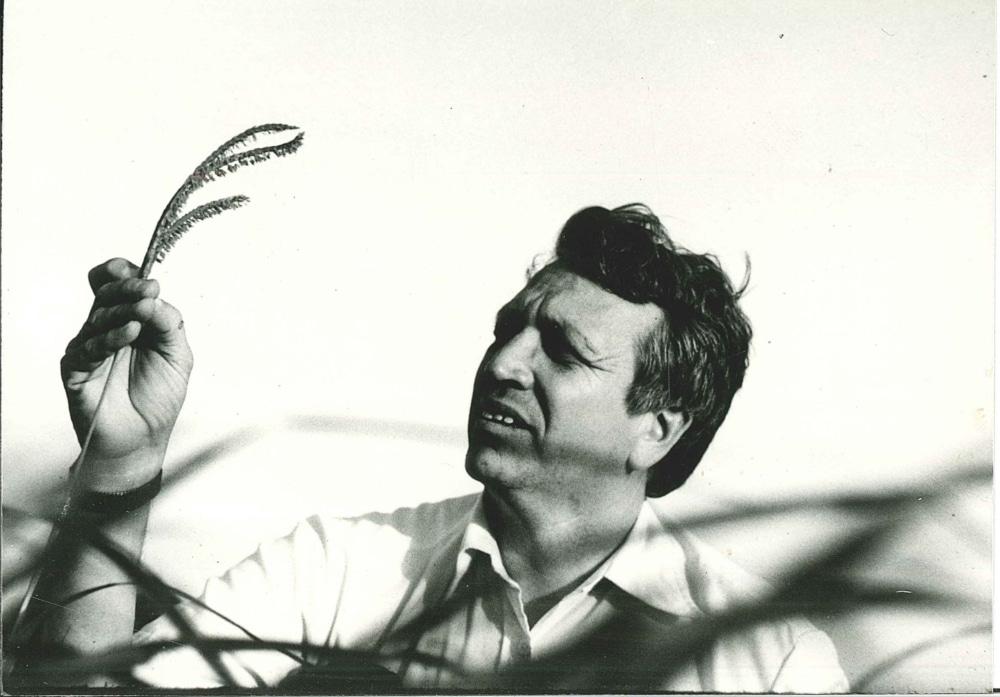
In this March 2024 interview for the Kansas Oral History Project, conducted by Rex Buchanan, Wes Jackson delves into the life, philosophy, and revolutionary science that define his legacy as a titan of sustainable agriculture. As a native Kansan and co-founder of The Land Institute, Jackson’s conversation with Buchanan offers a profound look at how the Kansas landscape inspired a global shift in how we think about food production.
Wes Jackson’s contribution to Kansas is rooted in his decision to return home in 1976, leaving a tenured professorship in California to establish The Land Institute near Salina. In the interview, he describes this return as a commitment to the “genius of the place.” By grounding his work in the native Kansas prairie, Jackson championed a radical departure from industrial farming. He argues against the “silos” of modern academia, advocating instead for a holistic approach that intertwines science, sociology, politics, and even religion.
The interview highlights his transformative vision for agriculture: replacing soil-eroding annual monocultures with “Natural Systems Agriculture.” This method mimics the prairie’s stability by using perennial grains in polycultures, ensuring soil health and sustainability. Wes Jackson discusses deeply personal influences, from his family’s Republican roots and connection to Dwight D. Eisenhower to the professors who sparked his intellectual transformation.
Throughout the discussion, Wes Jackson emphasizes the concept of “oughtness”—the ethical imperative to align human actions with ecological realities. He laments the loss of local community connection, symbolized by the decline of regional newspapers, yet remains steadfast in his mission. This oral history captures not just a scientist, but a philosopher-farmer whose work in the heart of Kansas continues to challenge and reshape the future of global agriculture.