 Main Menu


Post
Intermediate wheatgrass as a dual use crop for grain and grazing

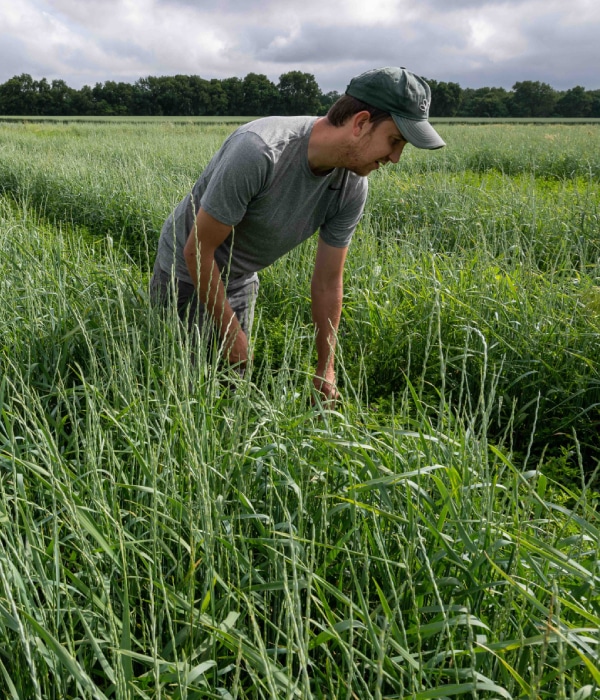
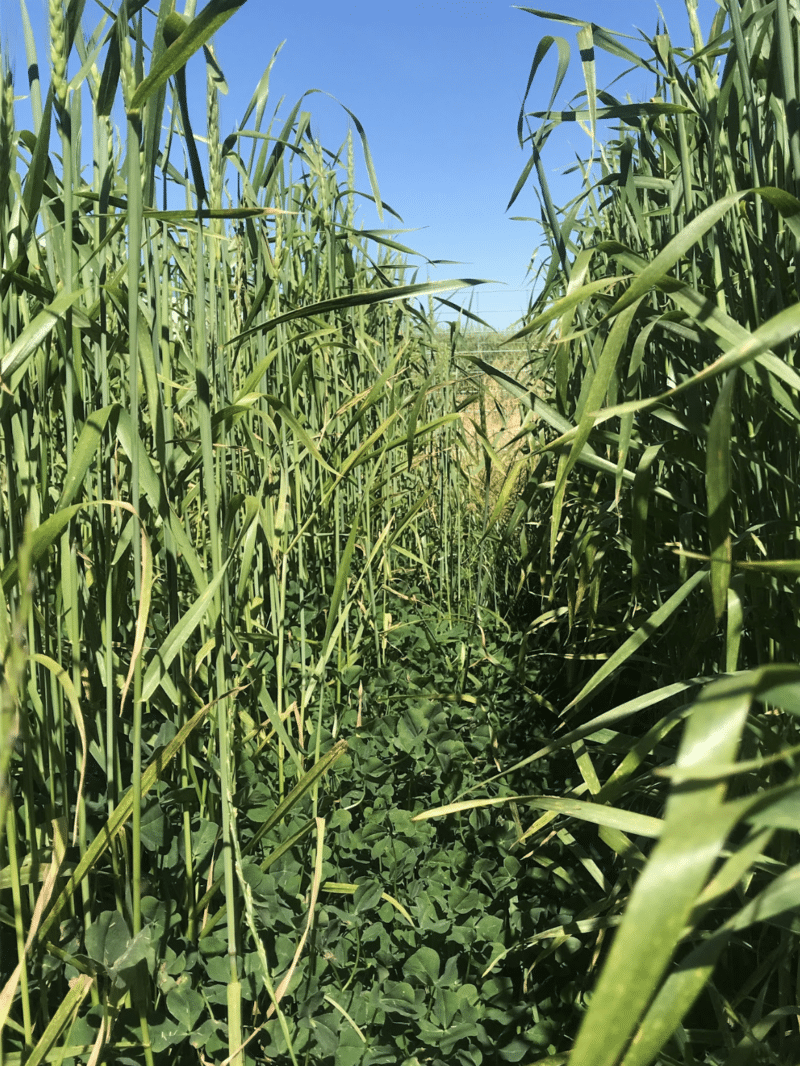
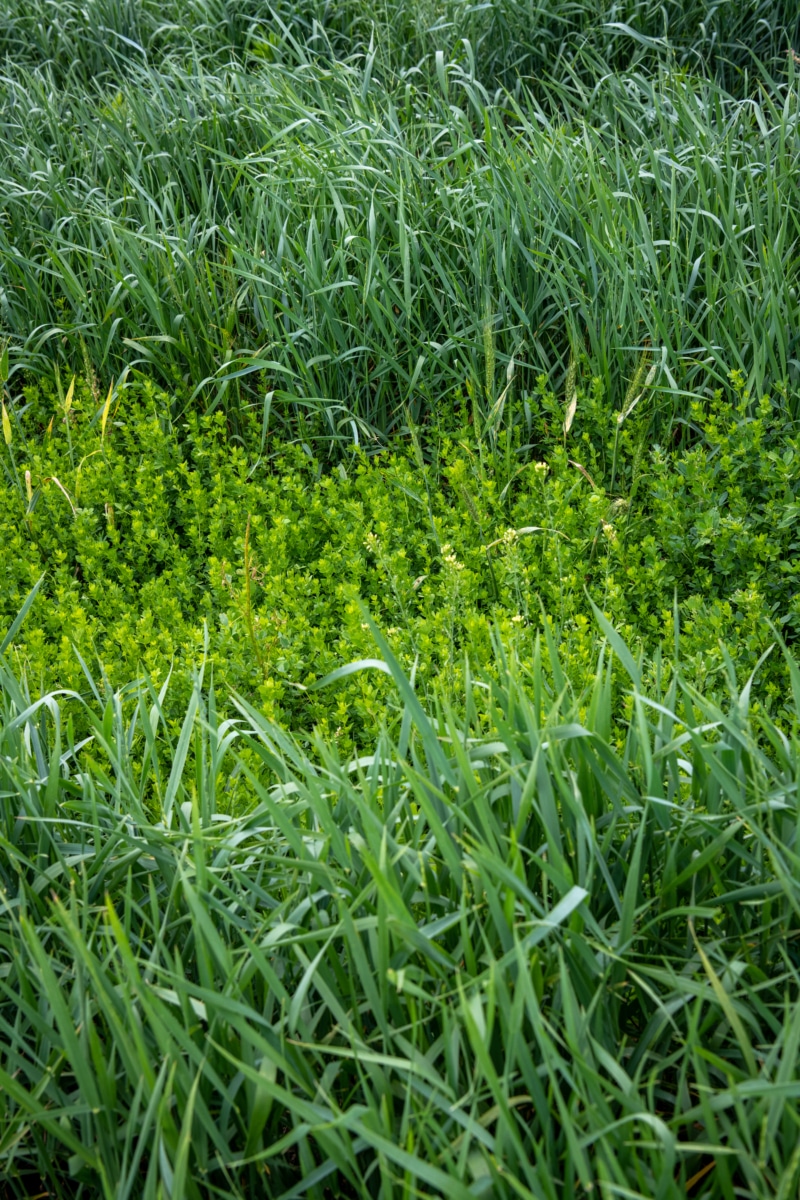
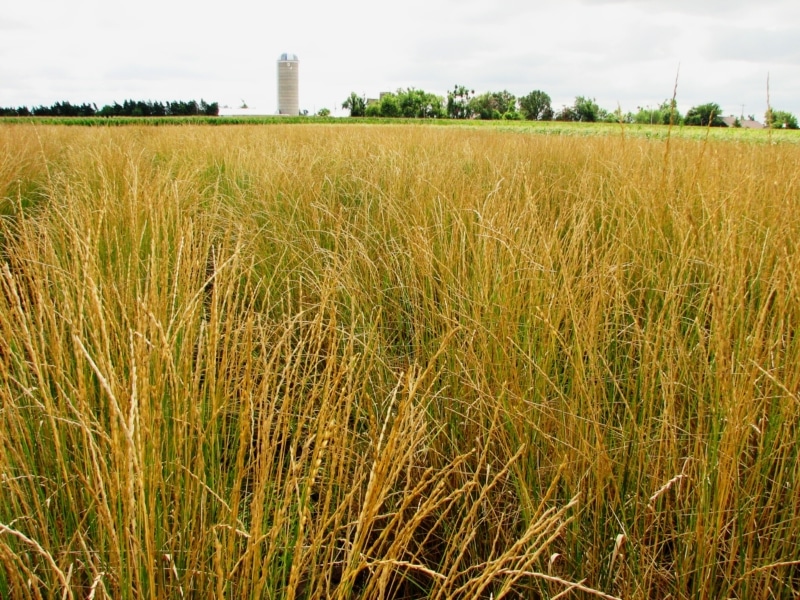
Researchers from The Land Institute and the University of Kansas investigated how Kernza® perennial grain and alfalfa intercropping can support Kernza productivity while also delivering ecosystem benefits like increased nutrient availability.
Management practices that minimize soil disturbance, reduce inputs, and provide sustainability across a broad range of environmental conditions are needed to ensure productivity into the future. Integrating intermediate wheatgrass (IWG; Thinopyrum intermedium), a perennial grain and forage crop, into agroecosystems may help achieve these goals. Additionally, diversification of IWG plantings by intercropping with a perennial legume could further increase other ecosystem services along with increases in nutrient availability. In this large-scale field experiment, IWG performance was assessed over two growing seasons in monoculture, monoculture with nitrogen fertilizer, and in an intercrop with alfalfa (Medicago sativa) at seven sites in four states that vary in environmental conditions. At the field scale, IWG grain production was similar in the intercrop and monoculture in both growing seasons at a majority of the sites. Intercropping did not reduce IWG biomass in the second growing season, but IWG biomass was reduced in the intercrop in the first growing season. Nitrogen fertilizer addition did not substantially alter IWG productivity at a majority of the sites. The results reinforce findings that intercropping with alfalfa has minimal impacts on IWG productivity after two growing seasons while providing potential for additional ecosystem services.