 Main Menu


Post
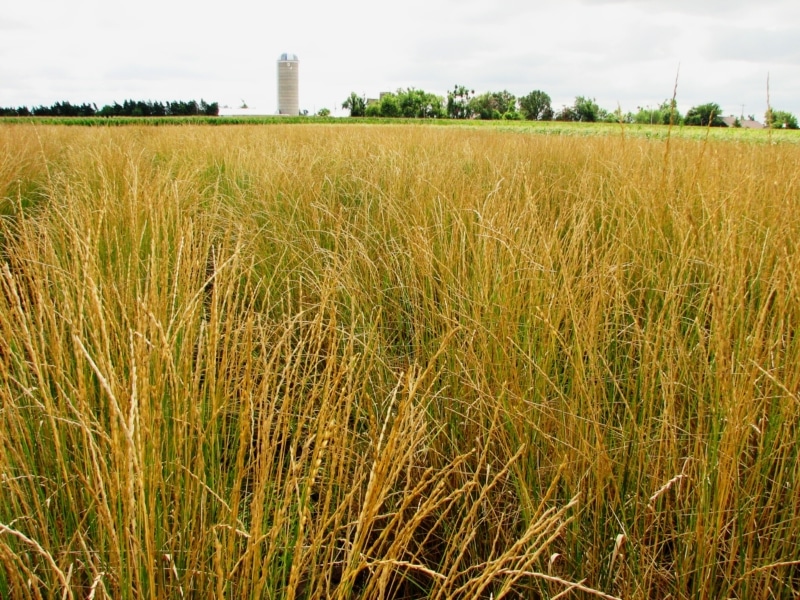
Intermediate wheatgrass as a dual use crop for grain and grazing

Researchers from the US, Kenya, and Spain explore how incorporating perennial vegetation into agricultural land can deliver notable ecosystem benefits, such as improved water, carbon, and nutrient cycling, while also producing food, fiber, and energy for humans. This group also calls for increased research and policy action to deploy a diversity of perennial crops on landscapes during agricultural production. Their goals to further perennialize agriculture are closely connected to The Land Institute’s research to develop perennial grains that combine food production with climate resilience and improved ecosystem health.
This commentary describes advances in knowledge over the past decade on how incorporating relatively small amounts of perennial vegetation at targeted locations in agricultural landscapes can lead to substantial, disproportionately large ecosystem benefits. We highlight research demonstrating the potential for perennial vegetation within agricultural landscapes to sustain crucial ecosystem services—including regulating water, carbon, and nutrient cycles and supporting biotic interactions—while simultaneously provisioning food, fiber, and energy. We also discuss several emerging frontiers where new research is leading to a deeper understanding of how to target perennial-based practices and policies to achieve desired outcomes. We emphasize scientific and technological advances for improving the design of perennial integration, support tools for practitioners, perennial crop and livelihood diversification, and transdisciplinary approaches for co-generation of knowledge and application. Finally, we call for increased action, including research, education, stakeholder engagement, and policy development, toward strategic integration of perennials in agroecosystems.