 Main Menu


Post
Intermediate wheatgrass as a dual use crop for grain and grazing

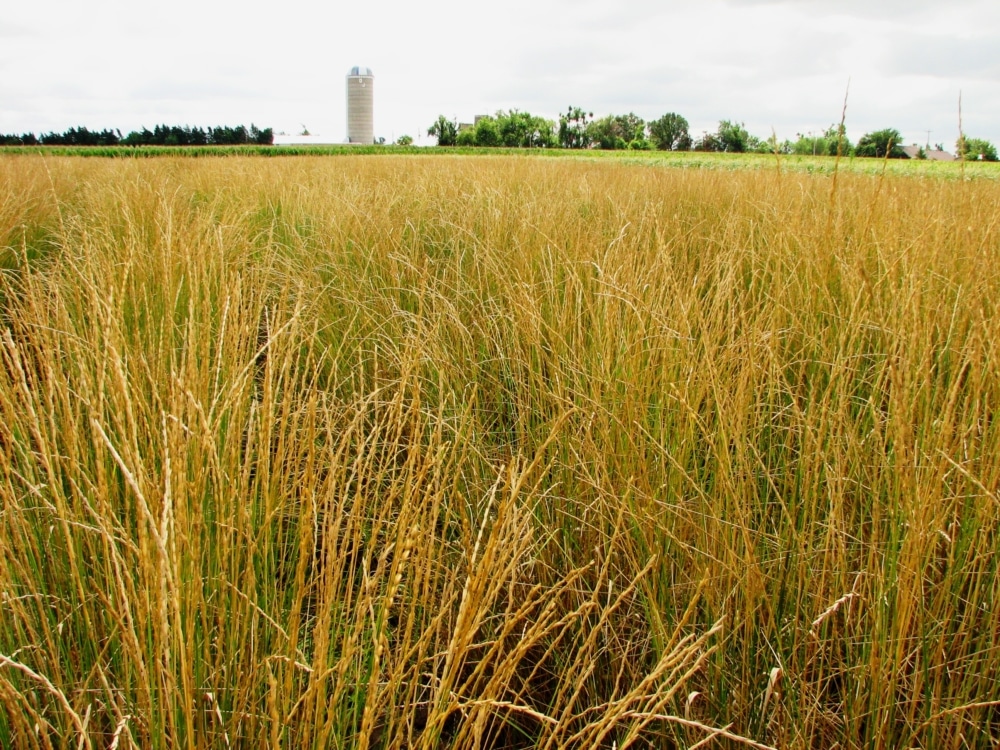
A collective of perennial grain researchers from Minnesota, Nebraska, North Dakota, Wisconsin, Utah, and Kansas published a Kernza® research paper showing that intermediate wheatgrass yields vary with environmental factors such as rainfall across a wide geographic range. This research indicates that future Kernza breeding efforts should consider location-specific varieties suited for specific regions and associated environmental conditions.
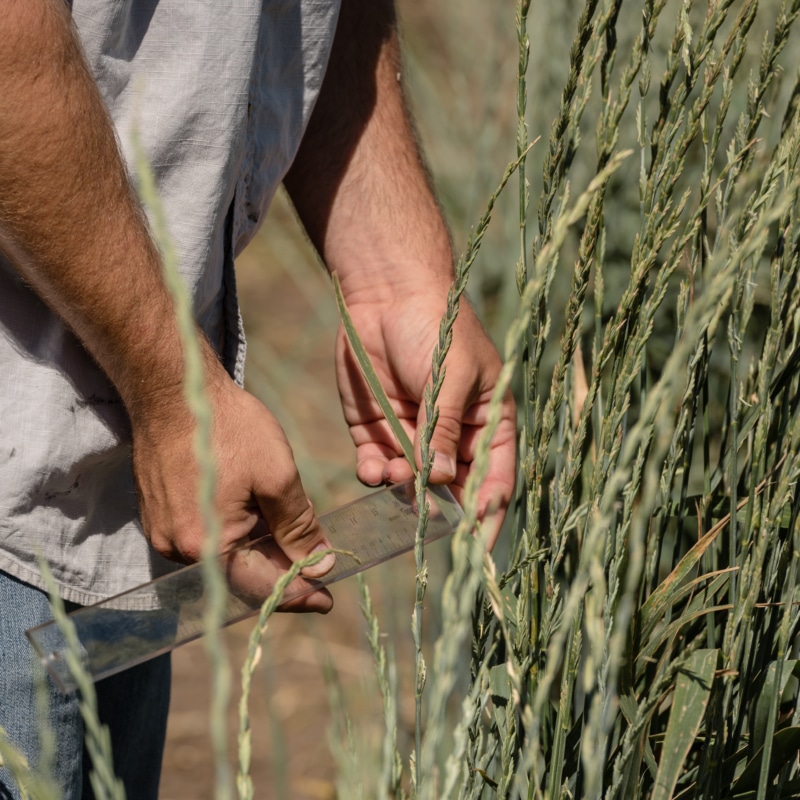
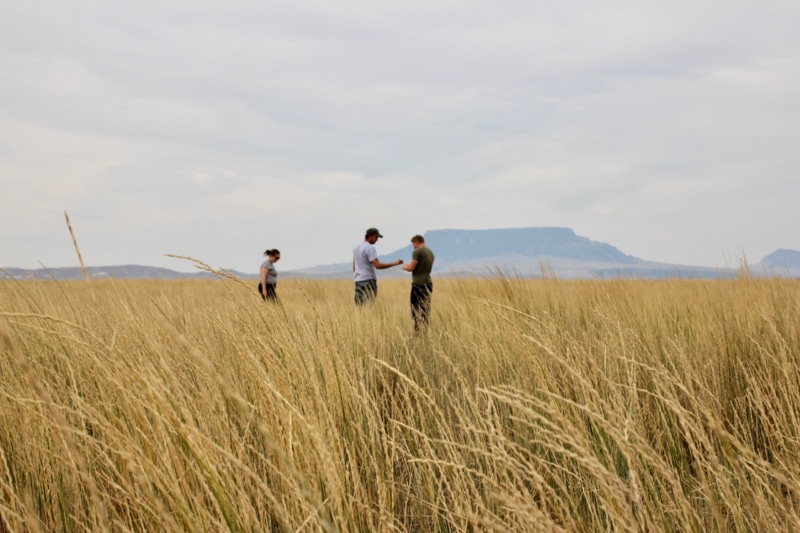
Crop rotation with perennial grain crops, such as intermediate wheatgrass (IWG; Thinopyrum intermedium), marketed as Kernza, promotes agroecological intensification and environmental sustainability relative to annual cropping systems. To assess yield performance and adaptability of IWG breeding populations across diverse environments, multilocation field trials were conducted from 2018 to 2022 in Minnesota, Wisconsin, Kansas, Nebraska, North Dakota, and Utah. Eight populations, MN-Clearwater, TLI-C5, TLI-C3, TLI-C4, MN1501, MN1502, MN1503, and the forage cultivar Rush, were evaluated using a randomized complete block design with four replications. Analysis of variance showed that location (27%) and location × harvest year interactions (44%) explained most seed yield variation, while genotype effects were modest. Yield declined after the second harvest year at most sites, indicating challenges in stand longevity. The Finlay–Wilkinson regression classified populations as high-yielding and responsive (MN-Clearwater and TLI-C5), low-yielding and stable (Rush), or intermediate-yielding but unstable (remaining populations). MN-Clearwater and TLI-C5 exceeded Rush by 78%–85%, reflecting breeding progress by the University of Minnesota and The Land Institute. Nonparametric analyses (Lin and Binns superiority index and Huehn’s rank difference) consistently identified MN-Clearwater and TLI-C5 as the top-performing populations across favorable and stressed environments. Although yields declined by 82% and 74% under stress, these populations maintained competitive rankings with minimal rank crossover, indicating broad adaptability. Fall and summer rainfall were the primary environmental factors influencing yield across locations. These results highlight increases in grain yield that regional breeding programs have achieved across a broad geographical range, while also demonstrating the possibility to select for location-specific performance in the future.
This study investigated the performance of eight intermediate wheatgrass (IWG) populations across seven diverse locations in the United States over several years. Environmental factors, particularly summer and fall rainfall, had a much greater impact on seed yield than genetic differences among IWG populations. MN-Clearwater and TLI-C5 consistently outperformed the others, particularly under favorable conditions. The forage variety Rush showed low yields across environments, whereas other varieties demonstrated inconsistent performance. Breeding efforts have significantly improved grain yields compared to forage varieties. However, the study found little evidence for the broad adaptation of IWG varieties across diverse environments, emphasizing the need to breed varieties tailored to specific environmental conditions.